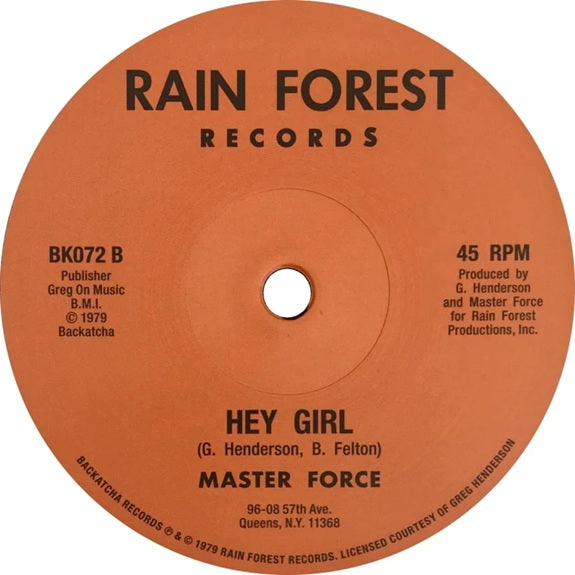


Description
1979, a 10-piece band from Brooklyn, New York, unleashed this supreme disco/soul-funk tune. Led by trumpeter Greg Henderson, Master Force built a strong reputation in the club scene, and their release “Hey Girl” c/w “Don’t Fight The Feeling” became a timeless classic supported by generations.
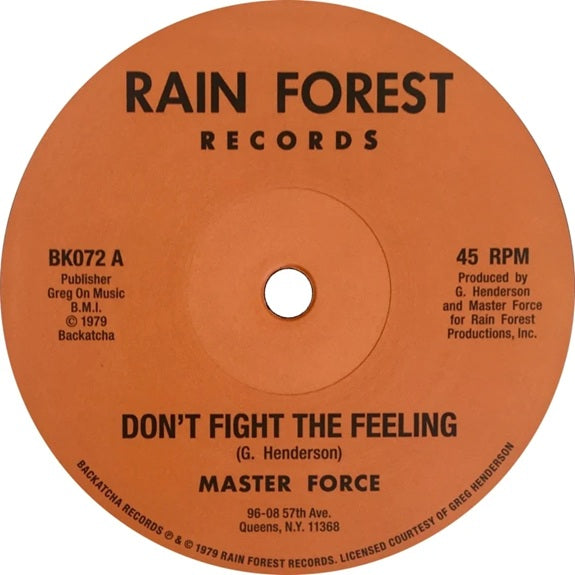
This vinyl reissue officially licenses both tracks as a 12-inch release, featuring the different mixes that were originally available on 7-inch and 12-inch formats at the time. Recorded, remastered, and cut at 45 rpm, it brings their appeal to the modern era.
The centerpiece “Hey Girl” combines a flowing piano riff, smooth vocals, and a deeply funky bassline, creating a groove that naturally makes you move. Meanwhile, “Don’t Fight The Feeling” stands out for its driving rhythm section and dazzling horn arrangement, capturing the very sound made for dancing in the late-70s disco/soul clubs.
Furthermore, this work, crafted by long-time performers such as pianist Bernie Felton and female vocalist Angela Blake, balances ensemble precision with passionate performance. Having performed at Carnegie Hall, they possessed a sound backed by extensive stage experience.
This is an essential disco vinyl for collectors who love disco/funk/soul and DJs who want to heighten the energy on the club floor. If you are looking for the origins of dance music before house/techno, this is undoubtedly a must-have.
A1. Don't Fight The Feeling
B1. Hey Girl
A standout choice on any playlist, Master Force’s 1979 release ‘Hey Girl’ c/w ‘Don’t Fight The Feeling’ has become a staple classic across generations tuned into the soul-funk-disco sounds of late 70’s New York and all its makings. Originally released on both 12” and 7”, both singles had different mixes and are equally sought-after.
Excerpt from an ‘Annual Dance’ flyer of 1979:
“Masterforce creates its own unique sound and has a groove all on its own. The group is guided by the dedication, love and faith in themselves and the sound of the soul-filled feeling of MASTERFORCE”
Led by composer and trumpet player Greg Henderson, Master Force were a 10-piece band based in Brooklyn, performing in the late 70s onwards throughout the city. They adhered to a strict rehearsal regime and headlined the club circuit including an evening at Carnegie Hall. “I’d played the trumpet for so many bands and I loved writing music. I was used to leading bands and organising musicians to get results. I always had a lot of original material I wanted to play so the concept for Master Force came naturally” says Greg.
Residing in Bedford-Stuyvesant, lead singer Bernie Felton had already been cutting 45’s with his vocals on Doo Wop singles since the late 50s and had a few generations worth of craftsmanship to share with his bandmates. “His vocals were so smooth and silky, he was an incredible singer,” says fellow Tenor-Saxophone player and music teacher Don Echoles. “Sid Bratton our keyboard player had the keys to the mailroom at his job and we had an arrangement to rehearse there after hours. Everyone really put a lot into it.”
The female lead was Angela Blake whose formative years in the church navigated her professional career as a seasoned vocalist. After Master Force, fellow singer and friend Yvonne Lewis (Rainbow Brown) recommended her to audition for Roberta Flack and the rest is history. She started touring with Flack in the early part of 1982 and has since recorded and sang backup behind many; Ronnie Dyson, Tito Puente, Sharon Jones and the Dap Kings, The Kills, Bette Midler, Roxanne Shante, Jessica Simpson, and Amy Winehouse to name a few.
There was a lot of experienced players and talent in the band and Greg knew the club scene and how to get the shows. Their music was sophisticated and the dress code reflected that. “Greg had us dressing real smart, he knew how to get gigs and really present a strong image. He always dressed sharp” says Doc.
“You gotta believe in what you’re doing,” says Greg.
“He’d write all the music and bring it for us to work on. A lot of bands just did covers but Greg was about original material ... we’d go through the parts and maybe add something that worked with the flavour. We were all about the rhythm section. Like ‘Hey Girl’, you hear that baseline? That’s me man doing that ‘Lovely Day’ bassline over” explains Doc about his Bill Wither’s inspired groove.
Produced by Greg Henderson and self-released on his Rain Forest Records imprint, the record was to be Master Force’s first and only release for the label before the group disbanded going their separate ways in the early 80’s.