

説明
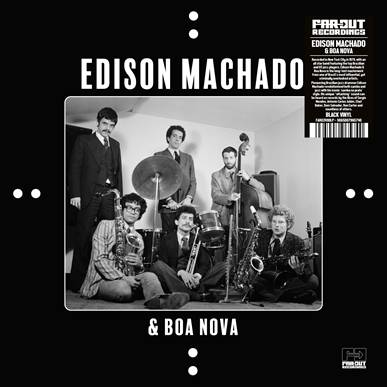
ブラジリアン・ジャズのドラム開拓者、Edison Machadoが1978年にニューヨークで録音しながら、一度も世に出ることのなかった幻の音源がFar Out Recordingsよりついに復刻。
15歳の時、演奏中にスネアドラムを壊した偶然から、シンバルでサンバのリズムを刻む画期的な奏法「samba no prato(皿の上のサンバ)」を考案。Antônio Carlos Jobimらと共にボサノヴァの発展に決定的な役割を果たした伝説的打楽器奏者だ。ブラジルの軍事独裁政権による迫害を受け、一時はドラムセットを手放すほどの苦境に陥るも、ニューヨークへ渡りBoa Novaアンサンブルと出会ったことで、創作の火を再び灯した。
軍隊経験に裏打ちされた完璧主義と、「戦争のよう」と称される攻撃的なスタイルは、洗練と野生の境界線を突き進む。精鋭セクステットによる重厚な管楽器の響きと、Dom Salvadorら巨匠による未発表曲が見事に融合。針を落とした瞬間、鋭いシンバルの残響と地を這うウッドベースの振動が重なり合い、1978年のスタジオに漂っていた極限の緊張感がダイレクトに伝わる。
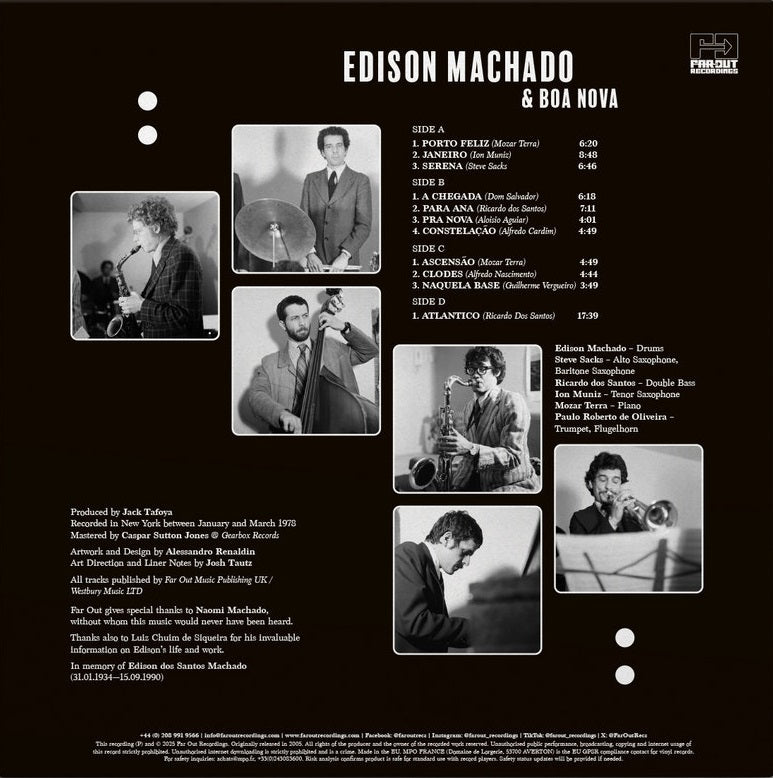
1. Porto Feliz
2. Janeiro
3. Serena
4. A Chegada
5. Para Ana
6. Pra Nova
7. Constelacao
8. Ascensao
9. Clodes
10. Naquela Base
11. Atlantico
Far Out Recordings proudly presents a landmark discovery in Brazilian jazz: the long lost album by drumming pioneer Edison Machado. Recorded in New York City in early 1978 but never released, Edison Machado & Boa Nova captures a pivotal figure in Brazilian music history at the height of his artistic powers.
Combining North and South American jazz traditions with Machado's revolutionary samba innovations, Edison Machado & Boa Nova represents a triumph against the odds. After facing persecution under Brazil's military dictatorship and being forced to sell his drum kit in 1976, Machado found renewed creative purpose in New York with the Boa Nova ensemble. The resulting album captures the essence of his genius - sophisticated yet wild, controlled yet daring, leading an ensemble of some of the best jazz, samba and bossa nova players of the day.
At just fifteen years old, Machado revolutionized Brazilian music through an accident that would change everything - when his snare drum broke during a performance, he began playing samba rhythms on the cymbal. This innovation, known as "samba no prato" (samba on the cymbals), brought new layers of dynamism to samba and proved instrumental in the development of bossa nova alongside contemporaries like Antonio Carlos Jobim and João Gilberto.
A complex and passionate figure, Machado was notorious for his militant perfectionism and "attacking" style of drumming. Having spent some years of his youth in the Brazilian army, musicians often remarked that he played as if he were at war. But his innovative style, while exhibiting complete control and sophistication, somehow so often danced right on the edge of chaos and wild abandon.
After making his name in Rio's legendary Beco das Garrafas (Bottles Alley) in the 1950s and early '60s, Machado went on to form Bossa Três - the world's first instrumental bossa nova group. His influence spread internationally through collaborations with Stan Getz, Sergio Mendes, Antônio Carlos Jobim, Milton Nascimento, and Chet Baker, while his 1964 album Edison Machado É Samba Novo stands as a masterpiece of Brazilian jazz.
At 80 minutes in length, Edison Machado & Boa Nova, the lost 1978 New York sessions, is a singular achievement in Brazilian jazz. The format itself is a rarity in the canon. It’s packed full of exceptional technical precision and creative vitality, with sophisticated arrangements and masterful improvisation from its exceptional sextet of Brazilian and US musicians: Paulinho Trompete (flugelhorn/trumpet), Ion Muniz (tenor saxophone), Steve Sacks (baritone saxophone), Mozar Terra (piano), and Ricardo dos Santos (double bass).
The album features unheard compositions by Brazilian masters Dom Salvador (Salvador Trio, Harry Belafonte, Edu Lobo), Guilherme Vergueiro (Raul De Souza, Leon Ware, Joyce), Aloisio Aguiar (Arthur Verocai, Airto) amidst the plethora of captivating original material by the members of the Boa Nova ensemble.